

Es & Flo
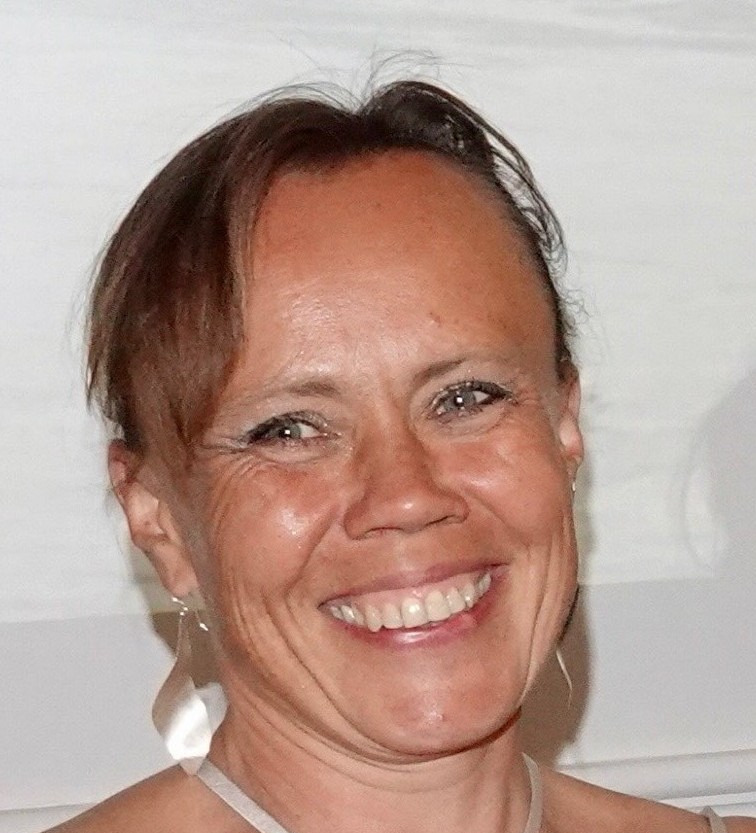
Old Fitz Theatre, Sydney, 13-28 February 2026

The review
“Es & Flo” is Jennifer Lunn’s first play, which premiered in Cardiff and transferred to London in 2023.
It is a five-woman story. An intimate, delicate portrait of a long, nearly four-decade relationship between two of them. A rare take on the subject where the age is stated explicitly - Es is celebrating her 71st birthday in the opening scene. The number is not a joke, and it holds perceptions grown on it as seaweeds are on shipwrecks. But organic, witty, funny, energetic, curious Es, which cannot be more precise than Annie Byron creating her, and content, devoted, loving, naturally self-disciplined Flo, an excellent work avoiding sentimentality but making one sense the depth of love and care by Fay Du Chateau, are wiping off the stereotypes graciously.
There is nothing loud in this play. It is about life confined from foreign eyes and judgments to keep the happiness. There is not much said about their life, except for the repeated reference to their time in the Women's nuclear bombs protest camps, where they met. Documentary video footage and soundtracks are filling up space during set changes - a very atmospheric travel to the past of those fearless feminists. One more heavy legacy is a mutual agreement do not to disclose their real relationships to each other. It is a consequence for a couple formed decades ago, when, for a teacher, let alone a Head, as Es was, being homosexual was absolutely banned.
The catastrophe is sneaking in slowly, like a fog. More and more, Flo is noticing that Es cannot recall obvious things. Es pushes away any attempt to get serious about her conditions, laughing off each of Flo’s concerns. Yet a quick shadow of uneasiness runs across her face every time Flo stumbles on a mismatch.
Such fragility, as known by many, evokes strange, sudden returns of forgotten relatives, unexpected gestures of care, a chain of events that lack dignity and respect but are full of greed and thirst for easy money. That stage of life when paperwork becomes a destiny-decisive and potentially dangerous. One small signature by a sick person demanded with undisclosed intentions might send any plans for the future fading into nothing fast, like a rock flying off a tall cliff.
It started with an unannounced visit of Beata, a carer hired by Es’s son Peter, who never talks to his mother (a cut on Es’s heart which never heals). Beata (Charlotte Salusinszky) is turning up with her little daughter Kasia (Erika Ndibe) - a single mother does not always have a place to leave the child. To add to the tension, Peter’s wife, Catherine (Eloise Snape), appeared with a batch of paperwork and a prospect for a nursing home. This is a woman who humiliates without intention - the manner of speaking loudly and slowly to a person, pre-assuming lack of understanding, is demeaning. Looking shapeless in her thick sweater and pants, being there on behalf of Peter, she feels like she has no sense of herself. Like sort of a tool, with something long-going sapping her.
Invasions happened with disinterest or bad will, but the core, the point of this story, that Es and Flo love and devotion, truth and depth of it, real heart and real strength, are converting the devil into a helping hand. Charlotte Salusinszky holds her Beata on a fine line of a woman becoming a close friend with her customers, and an experienced medical professional. Her manner of speaking straight, to call things as they are, her way to care with her heart, yet staying at a safe distance, are performed meticulously. Es instantly made friends with an 8-year-old Kasia, being at the same level of curiosity, passion for all she is doing - reading a book or enjoying jelly-babies. Kasia, a child, is the voice of unconditional acceptance. Such touch appears in various plays as a challenge for an ossified system of OKs and not-OKs. Erika Ndibe performs it with ease, lightness, and naturalness.
The only a touch downside of the show is too much simple furniture packed in a space, cut by a long back wall. The set-up feels crowded, confining the moves around the table, chairs, and the kitchen.
Looks, touches, small gestures, sighs, and laughs - that is what shapes this work. The most powerful final scene is Catherine's short, sharp breath-in. It is a picture of a woman who gathered all her courage till the last drop, stepped over the fear of crossing the point of no return, with no promises but only hope that the decision was right. A few-second scene with Catherine - one of the strongest endings in my collection.
Time is passing, it is inevitable and impossible to stop. It is sad, if not tragic. What makes it worth - how to spend it, what to choose, what values to stand by. Deep love, care, friendship, acceptance of each as they are with all their happy or traumatic past, and all silent dramas they are cursed to deal with every day - that is what certainly rates high.
Creative team
Producing Company: Mi Todo Productions @mitodoproductions
Writer: Jennifer Lunn @jensomelunn
Director: Emma Canalese @emma_canalese
Executive Producer: Chad Traupmann @ctraupmann
Producer: Emma Sampson @emmahsampson
Associate Producer: Dani Green @dani_kdaisy
Stage Manager: Bianca Dreis @_bianca_dreis
Set Designer: Soham Apte @soham__a
Lighting Designer: Luna Ng @luna_nyy_
Costume Designer: Alice Vance @alicekvance
Sound Designer: Keelan Ellis
Dialect Coach: Linda Nichols-Gidley @vocovox
Associate Directors: Nancy Denis @thenancydenisshow & Holly Mazzola @hzola
Intimacy Director: Sonya Kerr @kitty_grimalkin
Video Designer: Aron Murray @aron.murray
Cast
Annie Byron @vovoannie9, Eloise Snape @elosnape, Fay Du Chateau, Erika Ndibe @erika_ndibe, Charlotte Salusinszky @charlottesalusinszky
Photo Credit: Robert Catto


Comments